CRDBag Pouches — The Ultimate Camera Gear Organization System
Overview & Key Features
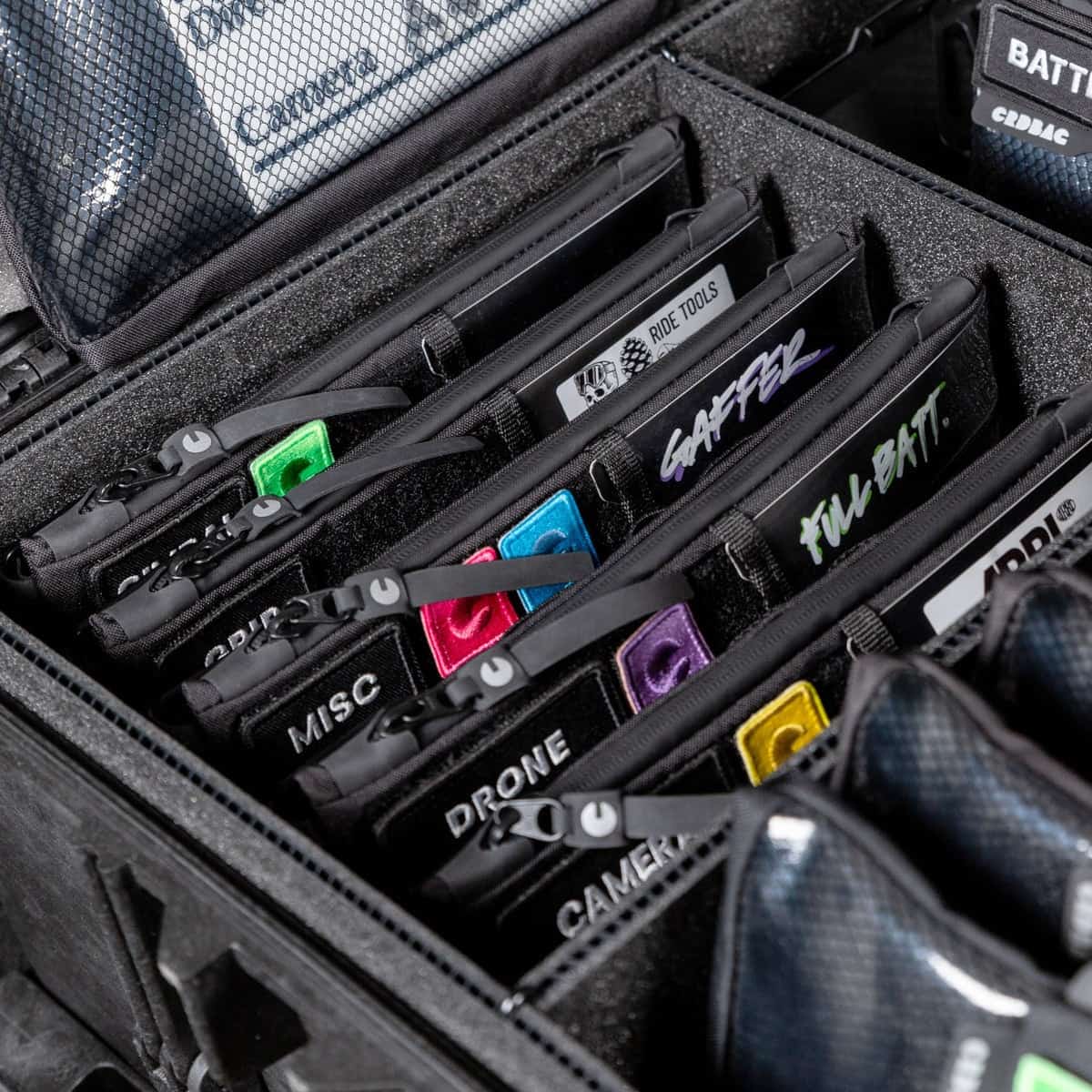
CRDBag pouches are purpose‑built for filmmakers, photographers, and production crews who need fast, repeatable ways to organize small but mission‑critical items: cables, adapters, batteries, filters, tools, media, lav mics, and more. Instead of a single “junk drawer” pouch, CRDBag is a modular system that lets you pre‑build sub‑kits and drop them into any case or pack.
- Modular sizes that stack and line up cleanly inside camera backpacks, rollers, and Pelican/Hard cases
- Durable materials: heavy‑duty nylon, reinforced stitching, weather‑resistant zippers
- Visibility: clear windows to identify contents at a glance without unzipping
- Labeling: hook‑and‑loop (Velcro) areas + card slots for custom labels
- Attachment points: loops/D‑rings for lanyards, carabiners, or rig mounting
- Flat, packable profile that avoids bulging and wasted space
The result is less rummaging, fewer lost parts, and a kit that’s easy to hand off between ACs, DIT, audio, and camera departments.
Real‑World Impressions
On fast‑moving sets, time is everything. CRDBag pouches make it easy to standardize your layout so everyone can find the right cable or tool without asking. Typical setups we see working well:
- Department color‑coding: e.g., green = camera, blue = audio, red = lighting, orange = grip
- Use‑case sub‑kits: “wireless audio kit,” “monitor power kit,” “gimbal hard‑mount kit,” “filter cleaning kit”
- Travel‑ready labeling: external label cards for TSA/production to ID the pouch contents at a glance
The clear window sounds minor, but it’s a real workflow win: contents are visible on the cart or in the case, which reduces unzip/re‑zip cycles. The zippers ride smoothly even over a full load, and the shells keep their shape well when stacked side‑by‑side inside a Pelican 1510/1535 or a camera backpack.
Another quiet benefit: standardizing pouch sizes helps you Tetris your cases. Two smalls equal one medium; two mediums equal one large—so layouts stay consistent across projects.
What Others Are Saying
- “The first accessory that actually saves me minutes every setup.”
- “Label windows + color coding = fewer questions from crew.”
- “They survive rain days and trunk heat. Stitching hasn’t failed.”
- “Don’t overstuff the largest size—spread weight across mediums.”
Across creator forums and pro sets, the consensus is that CRDBag moves you from “organized chaos” to a repeatable system—especially valuable on multi‑location days.
Workflow Tips & Best Practices
- Build sub‑kits around tasks: power, audio, monitoring, cleaning, rigging, data.
- Color‑code pouches or label cards by department so new crew can orient instantly.
- Divide inside with short Velcro wraps or elastic bands to keep coils tight and tools separated.
- Standardize sizing so cases pack flat; avoid one giant pouch that turns into a black hole.
- Inventory weekly: QR/label a quick checklist in Notes/Sheets to catch missing items.
Size Guide: What Fits Where?
- Small: lav mics, AA/AAA cells, SD cards, USB‑C dongles
- Medium: short XLRs, DTAP/LP‑E6 cables, ND/Black Mist filters, Allen tools
- Large: NP‑F/Gold/V‑mount accessories, longer HDMI/SDI, small chargers
- XL/Flat: matte box accessories, follow focus gears, fold‑flat tools
Build Quality & Durability
The fabric is thick and abrasion‑resistant, stitching is reinforced at stress points, and the zippers feel over‑spec’d for the weight they carry. After repeated load‑outs, the pouches maintain shape and the windows resist fogging or scratching with normal use. They’re not Pelican‑level waterproof, but the water‑resistant materials shrug off drizzle and dusty environments.
Price & Where to Get It
Pricing varies by size and bundle. Individual pouches typically land in the $29–$49 range; multi‑packs and mixed kits can run higher but save per‑unit cost. We recommend starting with a 3–5 pouch set to cover core tasks (power, audio, monitor, cleaning, rigging) and expanding as your kit grows.
Reasons to Buy
- Faster setups and tear‑downs with labeled, visible sub‑kits
- Repeatable packing across projects and crew
- Space efficiency inside Pelicans, rollers, and backpacks
- Durable materials that handle set abuse
Potential Drawbacks
- Larger sizes can be overstuffed—distribute into mediums to keep weight manageable
- Not fully waterproof; use dry bags if you expect sustained heavy rain
Join the Conversation
How do you build your sub‑kits? Share photos or a packing list in the comments—we’ll feature the smartest layouts in a follow‑up post and link back to your rig.