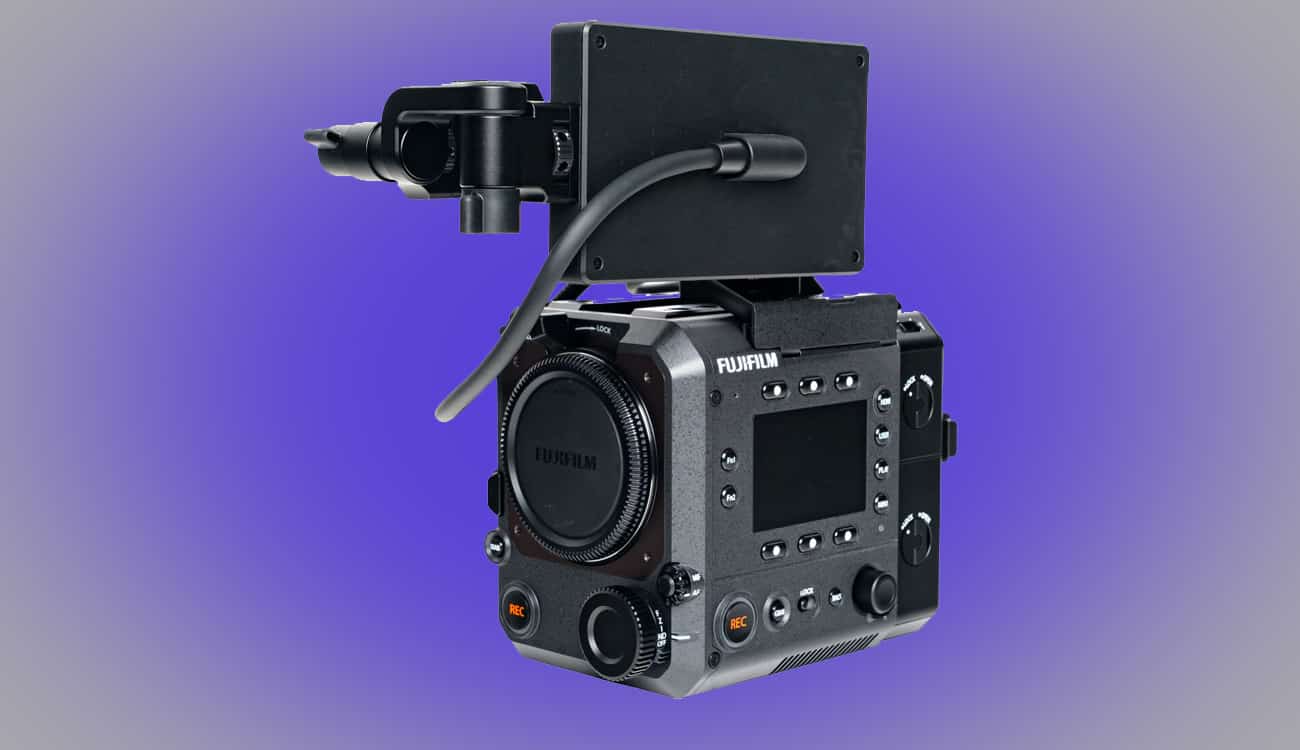
Fujifilm GFX ETERNA 55 Review: Large‑Format Cinema Powerhouse
Fujifilm’s ETERNA‑branded cinema body for the GFX system brings tall‑sensor flexibility and Fuji color to a purpose‑built video form factor. This guide covers who it’s for, workflows, rigging ideas, strengths, trade‑offs, and how it stacks up against other large‑format options.
Overview & Key Highlights
- What it is: A large‑format G‑mount cinema camera focused on pro video workflows.
- Why it matters: Tall Open‑Gate framing for multi‑deliverables, Fuji color aesthetic, and cine‑centric controls/I/O.
- Who it’s for: Narrative, commercial, and high‑end doc teams wanting a distinctive large‑format look without abandoning mirrorless ergonomics entirely.
Key Concepts (Operator‑Focused)
- Large‑Format Look: Wider field of view for a given focal length and shallower depth‑of‑field character at equivalent framing.
- Open‑Gate Capture: Use the full sensor for flexible reframes (2.39, 1.85, 16:9, 9:16, 1:1) from one master.
- Fuji Color: Film‑simulation looks plus log workflows for fast turnaround or heavy grading.
- Pro I/O & Monitoring: Cine‑first menus, timecode support, robust ports, and accessory power options.
- On‑Body ND (Model‑Dependent): Built‑in ND simplifies exposure management in changing light.
Who Should Consider It
- Narrative DP/Owner‑Ops seeking a large‑format A‑camera with a distinctive color pipeline.
- Commercial Teams needing Open‑Gate masters to service multiple aspect ratios.
- Doc & Branded Content where reliability, neutral ergonomics, and rapid setup are key.
Where It Shines
- Skin Tones & Color: Fuji’s filmic response and film‑sim ethos are a creative advantage for many productions.
- Open‑Gate Social Deliverables: Reframe once for 2.39, 16:9, and 9:16 without re‑shooting.
- Lens Rendering: Pairs beautifully with character primes and anamorphics (via adapters) for a unique look.
Potential Trade‑Offs
- Body Size/Weight: Larger than hybrid mirrorless; plan support and power accordingly.
- Ecosystem: Verify media, monitoring, RAW/ProRes pipelines, and accessories your workflow demands.
Recommended Build
- Top Handle + Safety Loop for secure carry and overhead rigging.
- Matte Box / NDs (if not relying on internal ND) for consistent exposures.
- Wireless Video for client/director monitors.
- Power: V‑mount micro with regulated cables and a compact plate.
- Media: Confirm qualified CFexpress/SD options for target codecs and frame rates.
Comparisons
- Versus LF Cine Bodies: Consider I/O, ND, RAW options, and ecosystem costs.
- Versus Full‑Frame Mirrorless: GFX’s larger imaging circle offers a different spatial feel and crop‑less Open‑Gate.
Workflow Notes
- Log + LUTs: Shoot in log and monitor with on‑set LUTs for faster approvals.
- Open‑Gate Master: Maintain framing guides for final delivery ratios.
- On‑Set Data: Align codec/bit‑depth with turnaround requirements.
Trusted Video Reviews & First‑Looks
Buy Now
Buy Fujifilm GFX ETERNA 55 on B&H
FAQ
Does it shoot Open‑Gate?
Yes, the appeal is tall‑sensor flexibility ideal for multi‑deliverables.
Is there internal ND?
Model‑dependent; many cine‑first bodies include on‑body ND. Confirm the configuration you’re ordering.
Can I adapt PL glass?
Yes—use appropriate G‑mount to PL adapters and verify coverage for your chosen sensor mode.
Related on SLATD