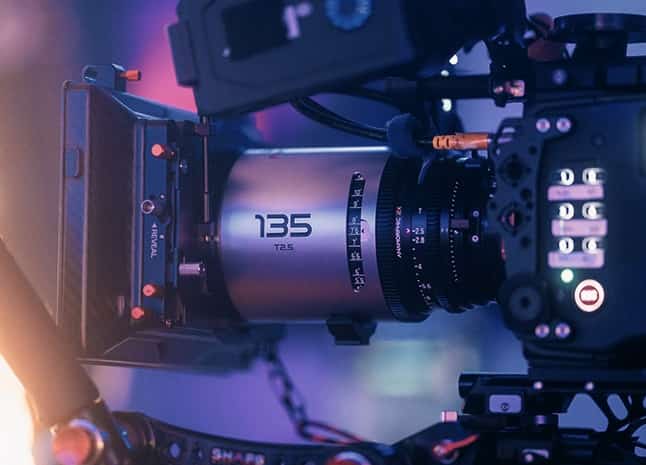
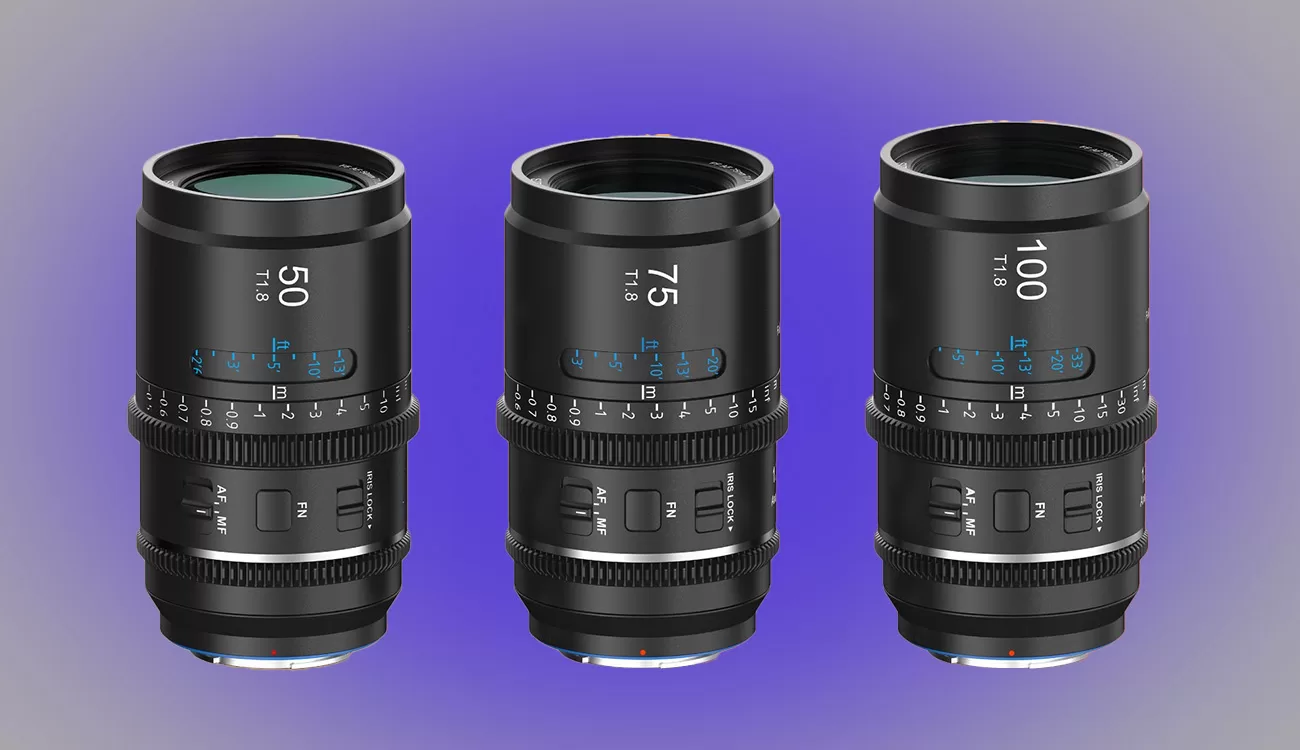
SIRUI Astra Series Announced — World’s First T1.8 Full-Frame Autofocus Anamorphic Lens Set
SIRUI has officially unveiled the Astra Series, a new family of 1.33x full-frame autofocus anamorphic primes in
50mm, 75mm, and 100mm. Each lens promises a constant T1.8 aperture, weighs in the 600–700g range,
and shares a unified 67mm filter thread, making this set unusually compact for “real” anamorphic glass.
Astra follows SIRUI’s earlier 20mm and 40mm S35 AF anamorphic lenses and pushes the concept into full-frame territory. The pitch is simple:
bring true anamorphic character, fast glass, and modern autofocus to independent filmmakers and content creators who don’t have the budget (or crew size)
for giant, fully manual cinema anamorphics.
Overview— Why Astra Matters
- World’s first full-frame AF anamorphic set with a constant T1.8 aperture across the range.
- Three focal lengths at launch: 50mm, 75mm, 100mm — all around 600–700g with a shared 67mm front.
- 1.33x squeeze on a 16:9 full-frame sensor → de-squeezes to ~2.35:1 with horizontal flares and oval bokeh.
- AF + MF: refined autofocus with AF/MF switch, focus scales, and follow-focus / LiDAR compatibility.
- Mounts: Sony E, Nikon Z, and L-mount at launch, aimed at mirrorless/hybrid cinema shooters.
- Two flare flavors: classic blue streak and a more neutral option.
- Pricing (launch): from $799 per lens or $2,399 for the 3-lens kit with hard case during the “super early-bird” phase.
What the Astra Series Is
At a high level, Astra is SIRUI’s answer to this question:
“What if anamorphic didn’t require 2kg primes, a first AC, and a rental budget?”
Each lens in the set is a 1.33x anamorphic prime designed for full-frame sensors.
On a 16:9 camera, that 1.33x squeeze de-squeezes to roughly 2.35:1, giving you a cinematic widescreen frame
with the expected horizontal streak flares and oval bokeh.
Astra is aimed squarely at:
indie narrative, branded content, weddings, music videos, and one-person doc crews who want something more
stylized than spherical glass, but still need autofocus and a rig that won’t crush a gimbal.
T1.8 in a 600–700g Anamorphic — Why That’s a Big Deal
The headline spec across the set is the constant T1.8 aperture.
In the traditional anamorphic cinema world, a full-frame anamorphic at this speed is usually huge, heavy, and expensive —
1.5–2kg per lens is not unusual. Astra’s lenses, by contrast, live down in the 600–700g zone while still covering full-frame.
Practically, T1.8 gives you:
- Real low-light capability for handheld doc, weddings, events, and music videos.
- Very shallow depth of field on full-frame, especially at 75mm and 100mm.
- The ability to strongly separate subjects while holding onto the anamorphic vibe.
The tradeoff is familiar: wide-open anamorphic is focus critical. On FF at T1.8, your margin of error is slim,
which makes the autofocus story here even more important.
Autofocus, Manual Control & Cinema Workflow
SIRUI has taken what it learned from its earlier S35 AF anamorphic lenses and pushed that AF system into full-frame.
The Astra design revolves around a fast, smooth AF drive that’s meant to handle both
run-and-gun scenarios and more controlled, repeatable setups.
Key points:
- AF/MF switch on the barrel for instant mode changes.
- Engraved focus scales to keep it usable in classic cinema workflows.
- Follow-focus & LiDAR compatibility, so you can treat Astra like a cine prime when you don’t want AF involved.
Autofocus on anamorphic lenses is non-trivial — the squeeze optics can make AF calibration trickier than on spherical lenses. In theory,
1.33x strikes a sweet spot: enough character without completely confusing the AF system. Real-world performance with moving subjects and challenging
backlight is something we’ll only really know once these are in the hands of shooters.
50mm, 75mm, 100mm — Focal Length Coverage & Physical Consistency
At launch, Astra is a three-lens set:
50mm, 75mm, and 100mm.
That range covers:
- 50mm: a flexible “all-rounder” focal length for walk-and-talks, wides, and medium shots.
- 75mm: classic portrait / mid-tele look with strong subject separation.
- 100mm: tighter coverage for detail shots, interviews, and compressed backgrounds.
SIRUI has kept all three lenses very similar physically:
nearly identical length, the same 67mm filter thread, and close weight tolerance.
That consistency pays off when you’re:
- Swapping lenses on a gimbal or lightweight stabilizer.
- Running a matte box / filter setup and don’t want to reconfigure for each focal length.
- Working on a shoulder rig where balance changes are a pain mid-shoot.
One note: stacking certain circular polarizers or variable NDs in front of anamorphic optics can cause unexpected artifacts or uneven polarization.
Standard solid NDs are typically safer when you’re chasing anamorphic consistency.
Mount Options & System Compatibility
At launch, Astra is coming in:
- Sony E-mount for FX3/FX6/FX9, a7/a9/a1, and hybrid bodies.
- Nikon Z-mount for Z6/Z7/Z8/Z9 and other full-frame Z cameras.
- L-mount for Panasonic S-series, Leica SL, and SIGMA fp/fp L.
SIRUI is officially authorized to produce L-mount lenses as part of the wider L-mount ecosystem, which also signals that these aren’t
just adapted stills optics but purpose-built designs for video and cine users.
We haven’t seen RF or X-mount versions announced yet, so Canon RF shooters are still in “wait and see” mode or leaning on
SIRUI’s manual anamorphic options and other systems.
Two Flare Styles: Blue Streak vs Neutral
SIRUI is offering Astra with two different flare treatments:
classic blue streak flares and a more neutral streak option.
That matters because anamorphic flare is a very personal thing:
- Some shooters want the loud, sci-fi blue streaks that scream “anamorphic”.
- Others prefer subtle highlights that still feel anamorphic but don’t hijack every point source in frame.
On paper, the neutral version should play better with more naturalistic or commercial work, while the blue option leans into music videos,
stylized narrative, and genre projects. We’ll have to see both in controlled tests to know how different they truly are.
Warranty & Support
SIRUI backs the Astra Series with a 3-year replacement policy covering non-user-induced issues (with proof of purchase)
plus a lifetime paid repair option for accidental damage. Registration is required via their website to activate the extended coverage.
It’s not a no-questions-asked crash replacement program, but it is more generous than the bare-bones warranties we often see on lower-cost cinema glass,
and it signals confidence in the mechanical build and AF hardware.
Pricing & Availability
At launch, SIRUI is promoting “super early-bird” pricing for Astra:
- $799 USD per lens during the early-bird phase (expected MSRP: $999).
- $2,399 USD for the three-lens set (50mm, 75mm, 100mm) including a $99 hard case, versus a planned
$2,999 standard set price.
Actual street pricing and timing will depend on region and retail channel. If you’re interested in building a matching anamorphic set for your mirrorless body,
the early-bird tier is clearly where the value is the strongest.
For more specs, charts, and sample footage, check SIRUI’s Astra landing page and current campaign details on their official channels.
Who Astra Is For — And Where It Fits in a Kit
On paper, Astra feels like a really compelling fit for:
- Solo shooters / small crews running Sony, Nikon, or L-mount bodies who want a distinct look without losing AF.
- Wedding, event, and commercial filmmakers who want to offer anamorphic highlight films or hero shots as an upsell.
- Indie narrative teams that can’t justify high-end anamorphic rentals every shoot but still want anamorphic as part of their visual identity.
- Hybrid creators who bounce between stills, spherical video, and stylized anamorphic work on the same camera system.
If you already own a solid full-frame body and lenses, Astra reads as a dedicated “cinema mode” option:
swap to these primes, de-squeeze in post, and you’ve got a fast, lightweight anamorphic look without blowing up your rig.
Final Thoughts
SIRUI has been steadily iterating on anamorphic for a while — from compact 1.33x primes to S35 AF anamorphics, and even more traditional cinema-leaning lines.
Astra feels like a logical next step: full-frame, autofocus, T1.8, and genuinely portable.
The real test will be how they resolve at T1.8, how the flares look across the set, and how confident the AF feels in chaotic, real-world shooting.
But as a concept, Astra lands squarely in that sweet spot SLATD readers live in: cinema-leaning tools that actually fit into a working shooter’s budget and workflow.
We’ll update this post when we get a set in hand to test rolling shutter handling, breathing, flare character, and how they behave on current mirrorless cinema bodies.
Join the Conversation
Planning to pick up the SIRUI Astra set? Already shooting anamorphic on E, Z, or L-mount? Drop your questions, test requests, or experience in the comments —
and let us know how you’d rig these on your current camera.